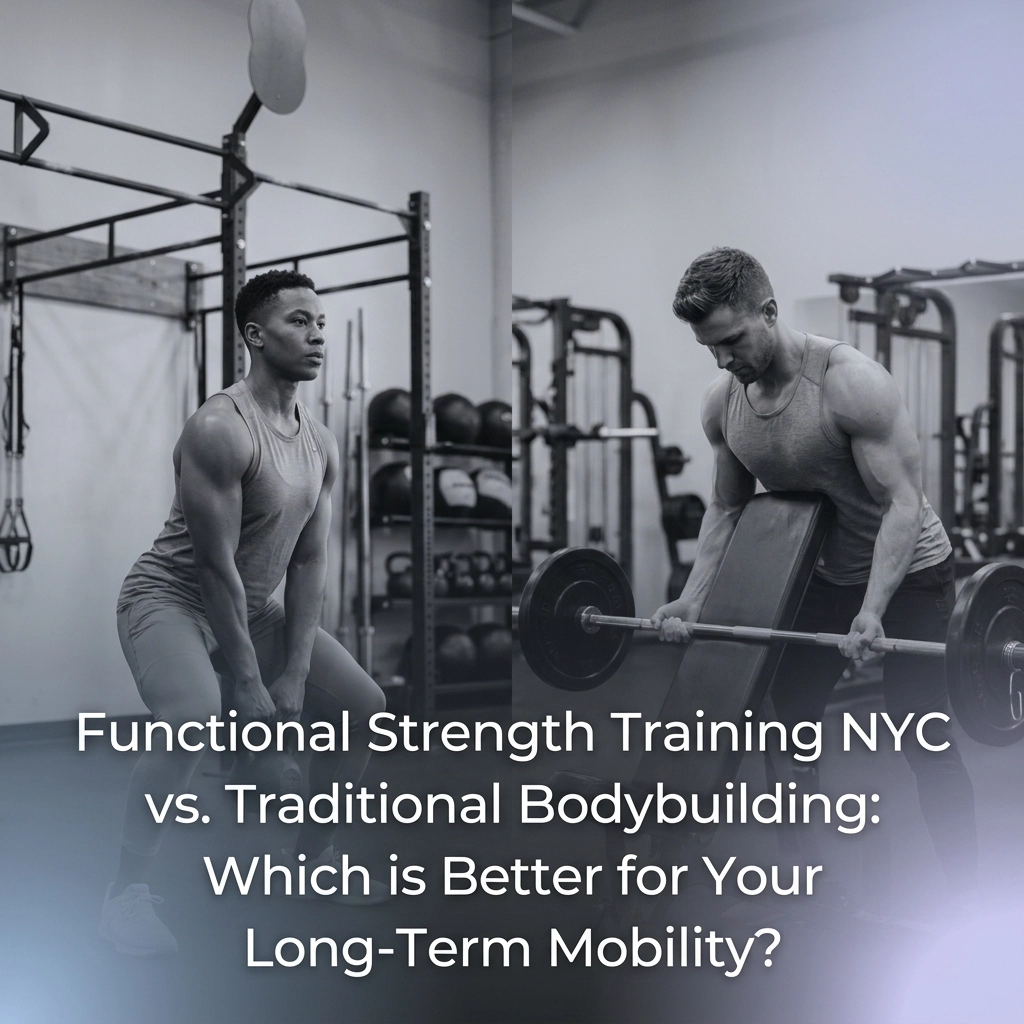
Functional Strength Training NYC vs. Traditional Bodybuilding: Which is Better for Your Long-Term Mobility?
For many high-performing professionals in New York City, the gym is a place to build a physique that matches their professional ambition. Traditionally, this has meant following a bodybuilding-style split: chest on Monday, back on Tuesday, and an obsession with isolated muscle growth.
However, as the years pass, many find that while their muscles are larger, their bodies feel more restricted. Chronic back pain, stiff shoulders, and a general lack of "utility" in their strength become the new normal. This is the difference between training for aesthetics and training for life.
In this guide, we will break down the fundamental differences between functional strength training nyc and traditional bodybuilding, specifically through the lens of long-term mobility and what we call the Physical Pension Plan.
The Core Philosophy: Hypertrophy vs. Utility
To understand which approach is right for you, we must first define the goals.
Traditional Bodybuilding: The Pursuit of Symmetry
Traditional bodybuilding focuses on hypertrophy, the enlargement of muscle tissue. The goal is aesthetic perfection. Exercises are often performed in isolation (think leg extensions or bicep curls) to "target" specific muscles without the interference of others.
- Focus: Muscle size, definition, and symmetry.
- Method: High volume, moderate weight, and isolation movements.
- Outcome: A visually impressive physique, often at the expense of multi-planar movement.
Functional Strength Training: The Pursuit of Performance
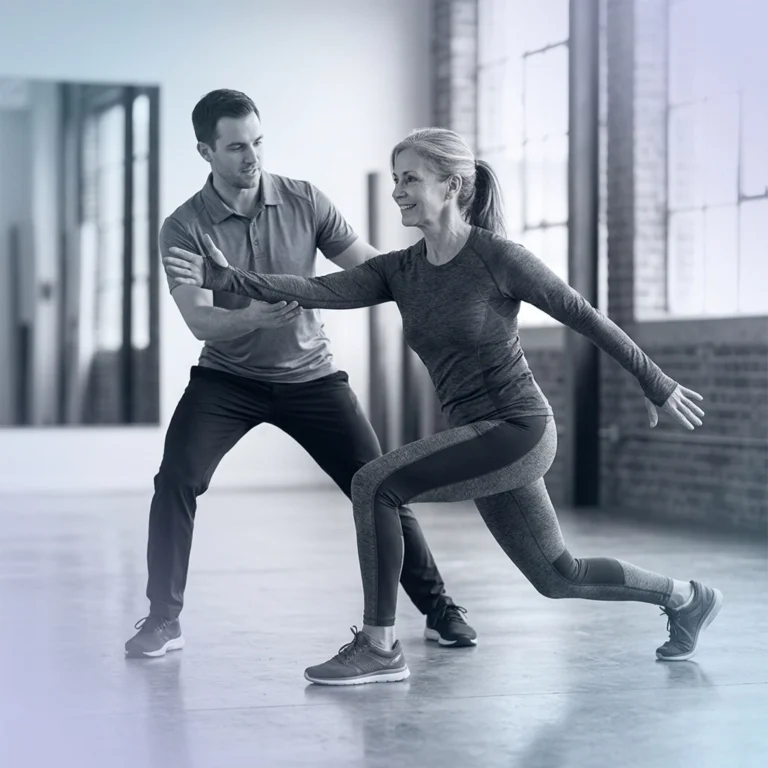
Functional strength training nyc focuses on movement patterns rather than individual muscles. It treats the body as an integrated unit. Instead of sitting on a machine, you are standing, lunging, pulling, and pushing in ways that mimic real-world activity.
- Focus: Movement efficiency, stability, and power.
- Method: Compound movements, multi-planar work, and core integration.
- Outcome: A body that is capable, resilient, and possesses "unrestricted access" to its full range of motion.

The Physical Pension Plan vs. Physical Bankruptcy
At Creative Fitness NYC LLC, we view your health as your ultimate business asset. Every workout is either a deposit into your Physical Pension Plan or a withdrawal that leads toward Physical Bankruptcy.
Why Bodybuilding Can Lead to Physical Bankruptcy
If your training relies solely on isolation and fixed-path machines, you are essentially training your muscles to work in a vacuum. Your "prime movers" (the big muscles) get strong, but your "suspension system" (the stabilizing muscles and connective tissues) remains weak.
This imbalance creates a "bankrupt" system. You might have the strength to bench press 225 pounds, but if you lack the mobility training nyc to reach overhead without arching your back, you are one wrong move away from a rotator cuff injury. Isolation moves can lead to:
- Joint Stiffness: Overdeveloped muscles pulling on joints without counter-stability.
- Reduced Range of Motion: Training only in the mid-range to maximize tension.
- Injury Risk: The "all show, no go" phenomenon where the body cannot handle unpredictable forces.
The Pension Plan Approach
Functional training is a long-term investment. By focusing on mobility training nyc and integrated strength, you are ensuring that your joints remain lubricated and your nervous system stays sharp. You are building "Biological Capital" that pays dividends in your 50s, 60s, and beyond.
Technical Comparison: Bodybuilding vs. Functional Strength
The following table highlights the technical differences between these two methodologies:
| Feature | Traditional Bodybuilding | Functional Strength Training |
|---|---|---|
| Primary Goal | Muscle Hypertrophy | Movement Competency |
| Movement Plane | Mostly Sagittal (Forward/Backward) | Multi-Planar (3D Movement) |
| Joint Interaction | Single Joint (Isolation) | Multi-Joint (Integration) |
| Core Involvement | Secondary/Braced | Primary/Dynamic |
| Mobility Focus | Low (Often neglected) | High (Integrated into every move) |
| Real-World Carryover | Low | Very High |
Why Long-Term Mobility Requires Integration
Mobility is not just "stretching." True mobility is the ability to actively control your joints through their full range of motion.
In traditional bodybuilding, mobility is often an afterthought, something you do for five minutes on a foam roller. In personalized fitness coaching, mobility is the foundation. If you cannot perform a deep squat with proper mechanics, we don't add weight; we fix the mechanics.

The "Unrestricted Access" Principle
When you train for functional strength, you gain "unrestricted access" to your body. This means:
- Thoracic Spine Mobility: The ability to rotate and extend your upper back, which is crucial for desk-bound NYC professionals.
- Hip Dissociation: The ability to move your legs independently of your pelvis, preventing lower back pain.
- Ankle Dorsiflexion: Necessary for proper gait and deep squatting patterns.
High-Performance Durability for the NYC Lifestyle
Living in New York City is an athletic event. Navigating subways, carrying groceries, sprinting for an Uber, and sitting for long hours at a desk require a body that is durable.
Functional strength training nyc builds this durability through exercises like the Farmer’s Walk. This move builds grip strength, core stability, and postural resilience, all while teaching your body to maintain integrity under load.

The Suspension System: Stability and Joint Control
Think of your body’s stabilizers as the suspension system of a high-end car. Bodybuilding builds a massive engine but often ignores the shocks and struts. Functional training ensures the suspension can handle the engine’s power.
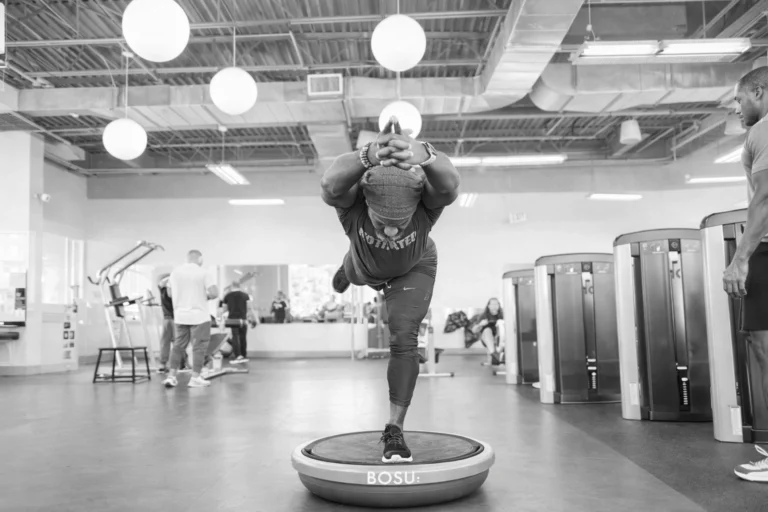
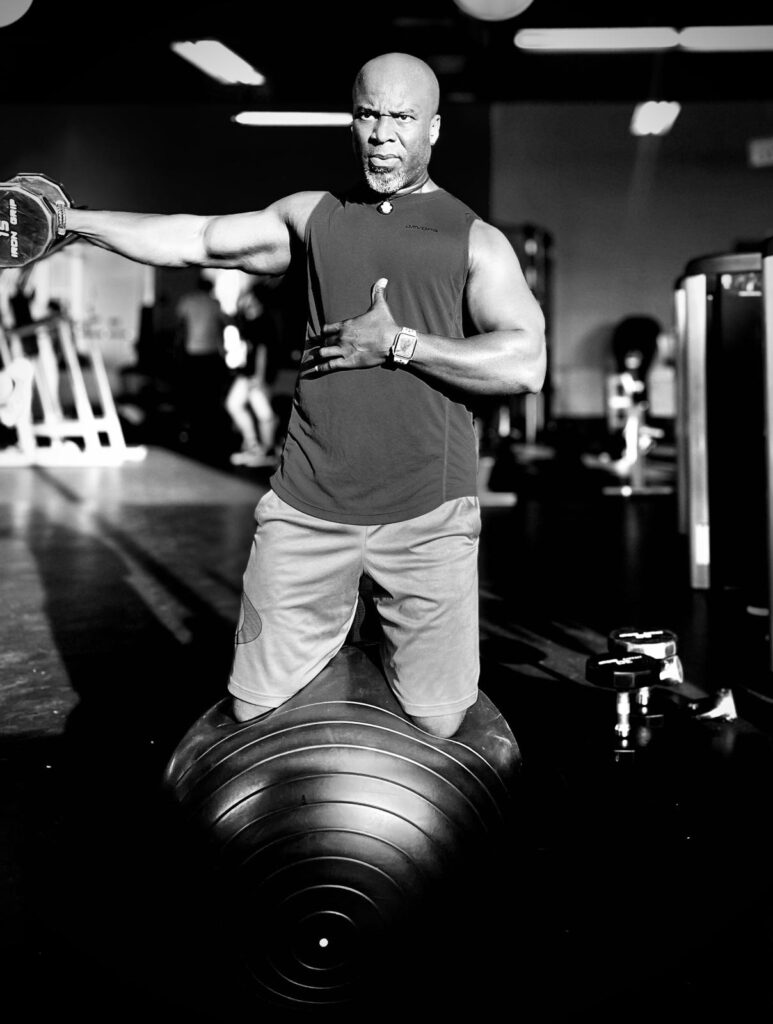
Using tools like BOSU balls or suspension trainers forces the "smaller" muscles to fire. This creates joint centration, keeping the "ball" of the joint perfectly centered in the "socket." This is the secret to avoiding the "wear and tear" often associated with decades of heavy lifting.

FAQs: Functional Strength and Mobility
1. Can I still build muscle with functional strength training?
Yes. While the primary goal is movement, compound functional movements (squats, deadlifts, presses) are the best drivers of natural muscle growth. You may not reach "pro-bodybuilder" size, but you will develop a dense, athletic physique.
2. Is bodybuilding bad for you?
Not inherently. However, it is incomplete. If you enjoy traditional bodybuilding, you must supplement it with mobility training nyc to ensure you don't become "muscle-bound" and prone to injury.
3. How often should I train for functional strength?
For the busy professional, 3 to 4 sessions per week of personalized fitness coaching is the sweet spot. This allows for adequate recovery while maintaining the stimulus needed for neurological and physical adaptation.
4. Why does my back hurt when I do traditional gym machines?
Fixed-path machines often force your body into unnatural positions that don't account for your specific limb lengths or joint mechanics. Functional training allows for "organic" movement paths that respect your individual anatomy.
5. I’m over 40. Is it too late to start functional training?
Actually, it’s the best time to start. As we age, we naturally lose muscle mass (sarcopenia) and balance. Functional training is the most effective way to reverse these trends and maintain independence.
Investing in Your Future Self
Choosing between functional strength and traditional bodybuilding doesn't have to be an "either/or" scenario, but for long-term mobility, the hierarchy is clear. Functional strength must be the foundation.
If you are a New Yorker who values efficiency, longevity, and high performance, it is time to stop training for a mirror and start training for a lifetime of movement. Don't let your training lead to physical bankruptcy. Build a body that allows you to say "yes" to any adventure, pain-free.

Ready to start your Physical Pension Plan?
Explore our personalized fitness coaching options and discover how we integrate mobility and strength to help you achieve a high-performance life. Consistent, smart training is the only way to ensure your best years are still ahead of you. Stay disciplined, stay mobile, and keep building that biological capital.